
Rio Rancho Criminal Defense Lawyer


28+
years
of Combined Legal Experience
400+
Resolved Cases

Proven Defense for Serious New Mexico Charges
Discover how Peake Law Firm has helped clients fight criminal allegations, protect their records, and move forward after difficult cases.
View Our Case Results

Criminal Defense Attorney Jonathan M. Peake
Jonathan M. Peake defends Rio Rancho clients against misdemeanor and felony charges in municipal, magistrate, and district courts. As a former New Mexico prosecutor, he knows how the State charges cases, uses police reports, pressures plea decisions, and tries to prove guilt in court.
DWI & Traffic
Protect Your License. Protect Your Future.
Facing DWI charges in New Mexico? Your driver's license, your job, and your freedom are at risk. As a former prosecutor, Jonathan knows exactly how the state builds DWI cases and how to challenge their evidence. With dozens of DWI cases handled yearly, our criminal defense attorneys have the experience to fight for the best possible outcome.
DWI & Traffic Offenses We Defend:
- First Offense DWI
- Repeat Offense DWI
- Felony DWI
- Aggravated DWI
- CDL DWI Defense
- Breathalyzer Challenges
- License Suspension Hearings
- Reckless Driving
.avif)
DWI & Traffic
License Deadlines, Test Records, and Police Video Matter Early
A Rio Rancho DWI case can be split into two tracks: the criminal charge and the driver’s license issue. Breath or blood numbers are only part of the case. The officer still needs a lawful stop, proper arrest grounds, correct testing procedures, and reliable paperwork.
Jonathan’s former prosecutor experience helps the firm spot weak points in the State’s DWI file. The defense may focus on body camera footage, field sobriety instructions, breath machine records, blood draw timing, implied consent forms, MVD deadlines, and whether the officer’s report matches the video.
DWI & Traffic Offenses We Defend:
- First Offense DWI
- Repeat Offense DWI
- Felony DWI
- Aggravated DWI
- Drug DWI
- Breathalyzer Challenges
- Blood Test Challenges
- License Suspension Hearings
- Reckless Driving
- Traffic Violations
Schedule a Consultation DWI Defense
Drug Offenses
The State Must Prove More Than Drugs Were Nearby
Drug charges often start with a search of a car, home, bag, pocket, or shared space. The key issue is not always whether drugs were found. The harder question for the State may be whether the drugs legally and factually belong to the accused person.
In possession cases, the defense may challenge access, control, ownership, search legality, and police assumptions. In trafficking cases, the focus may shift to quantity, packaging, statements, phone evidence, lab results, and whether prosecutors can prove intent to distribute instead of mere possession.
Key Drug Crimes We Defend:
- Drug Possession
- Possession with Intent to Distribute
- Drug Distribution/Trafficking
- Drug Manufacturing
- Drug Paraphernalia
- Prescription Drug Fraud
Schedule a Consultation Drug Offense Defense
Violent Crimes
Fights, Threats, and Injuries Need More Than One Version of Events
Violent crime cases often begin in confusion: a fight, a family conflict, a weapon claim, conflicting statements, or an injured person blaming someone at the scene. Police may write the first version quickly, but that version is not always complete.
The defense may look at who started the confrontation, whether self-defense applies, whether injuries match the accusation, whether witnesses changed their stories, and whether the charge is higher than the facts support. In serious cases, early review of 911 audio, photos, medical records, and body camera footage can change the direction of the defense.
Key Violent Crimes We Defend:
- Assault and Battery
- Aggravated Assault
- Domestic Violence
- Battery Against a Household Member
- Homicide/Murder
- Manslaughter
- Robbery
- Kidnapping
- Hate Crimes
Schedule a Consultation Violent Crime Defense
Property & Theft
Value, Intent, and Identification Can Decide the Charge
Theft cases are not all the same. A shoplifting accusation may turn on store video and loss prevention reports. A burglary case may depend on entry and intent. A fraud or embezzlement case may involve records, payments, access, and accounting details.
Our criminal defense lawyers look at what the State can actually prove: who took the property, what it was worth, whether there was intent to steal, whether the accused was correctly identified, and whether the charge was raised beyond what the evidence supports.
Key Property & Theft Crimes:
- Petty Theft
- Grand Theft
- Shoplifting
- Burglary
- Robbery
- Receiving Stolen Property
- Auto Theft
- Fraud
- Vandalism
Schedule a Consultation Property Crime Defense
Domestic Violence
No-Contact Orders and Family Fallout Can Start Immediately
A domestic violence arrest can change daily life before trial. The court may order no contact, remove someone from the home, restrict firearm possession, or create rules that affect parenting time and custody issues.
These cases often turn on statements made under stress. The defense may examine 911 calls, officer body camera footage, injuries or lack of injuries, prior conflict, witness bias, self-defense, and whether the alleged victim’s story changed after the arrest.
Domestic Violence Charges We Defend:
- Battery Against a Household Member
- Assault Against a Household Member
- Criminal Damage to Property of a Household Member
- Violation of Protective Orders
- Stalking or Harassment Allegations
- False or Exaggerated Accusations
- Domestic Violence Probation Violations
Schedule a Consultation Domestic Violence Defense
Weapons Charges
Possession, Search Rules, and Enhancements Shape the Case
A weapon charge may stand alone or appear as an added allegation in a drug, domestic violence, or violent crime case. That addition can affect bond, plea talks, sentencing exposure, and future firearm rights.
The defense may focus on where the weapon was found, who owned it, whether the accused knew it was there, whether police had a legal basis to search, and whether prosecutors are using the weapon allegation to raise pressure in a weaker case.
Weapons Charges We Defend:
- Illegal Possession of a Firearm
- Felon in Possession Allegations
- Use of a Weapon in a Crime
- Firearm Enhancements
- Unlawful Carrying Allegations
- Weapons Found During Vehicle Searches
- Weapons Tied to Domestic Violence Cases
Schedule a Consultation Weapons Charge Defense
Other Charges
Court Level, Charge Type, and Record Risk Change the Defense
Some Rio Rancho cases are handled as petty misdemeanors. Others start with a felony preliminary hearing and may move to district court. The charge level affects deadlines, plea options, sentencing exposure, and how aggressively the State may pursue the case.
Our Rio Rancho criminal defense lawyers also handle charges involving financial records, digital evidence, probation reports, sensitive accusations, and eligible record-clearing matters. The defense plan should match the court, the evidence, and the client’s long-term risk.
Additional Criminal Defense:
- Expungement
- Probation Violations
- White-Collar Crimes
- Sex Crimes
- Crimes Involving Children
- Cyber Crimes
- Resisting Arrest
- Disorderly Conduct
- Public Intoxication
- Misdemeanors
- Felonies

The Police Report Is Not the Final Word
One report can miss context, flatten the facts, or frame you before your side is heard. Peake Law Firm can step in early, test the State’s version, and start building the record your defense needs.


What the First Phase of a Criminal Case Looks Like
A Rio Rancho criminal case does not always begin the same way. Some people are arrested and booked. Others receive a citation, summons, warrant notice, or probation violation report. From that moment, the case starts moving through court rules, deadlines, and evidence requests.
The next steps may include:
- Release terms: The judge may order bond, no-contact rules, alcohol testing, GPS monitoring, travel limits, firearm restrictions, or other conditions.
- First court appearance: The court may explain the charge, confirm release conditions, and set future dates.
- Discovery review: The defense requests and reviews police reports, body camera footage, 911 audio, lab results, witness statements, search materials, and DWI testing records.
- Pressure points in the case: A lawyer may challenge the stop, arrest, search, statements, chemical test, probable cause, identification, or missing evidence.
- Case resolution or trial: The case may end through dismissal, reduction, deferred sentence, plea agreement, trial verdict, probation, jail, or another court order.
- Separate license issue in DWI cases: A DWI arrest can trigger driver’s license deadlines outside the criminal court case.
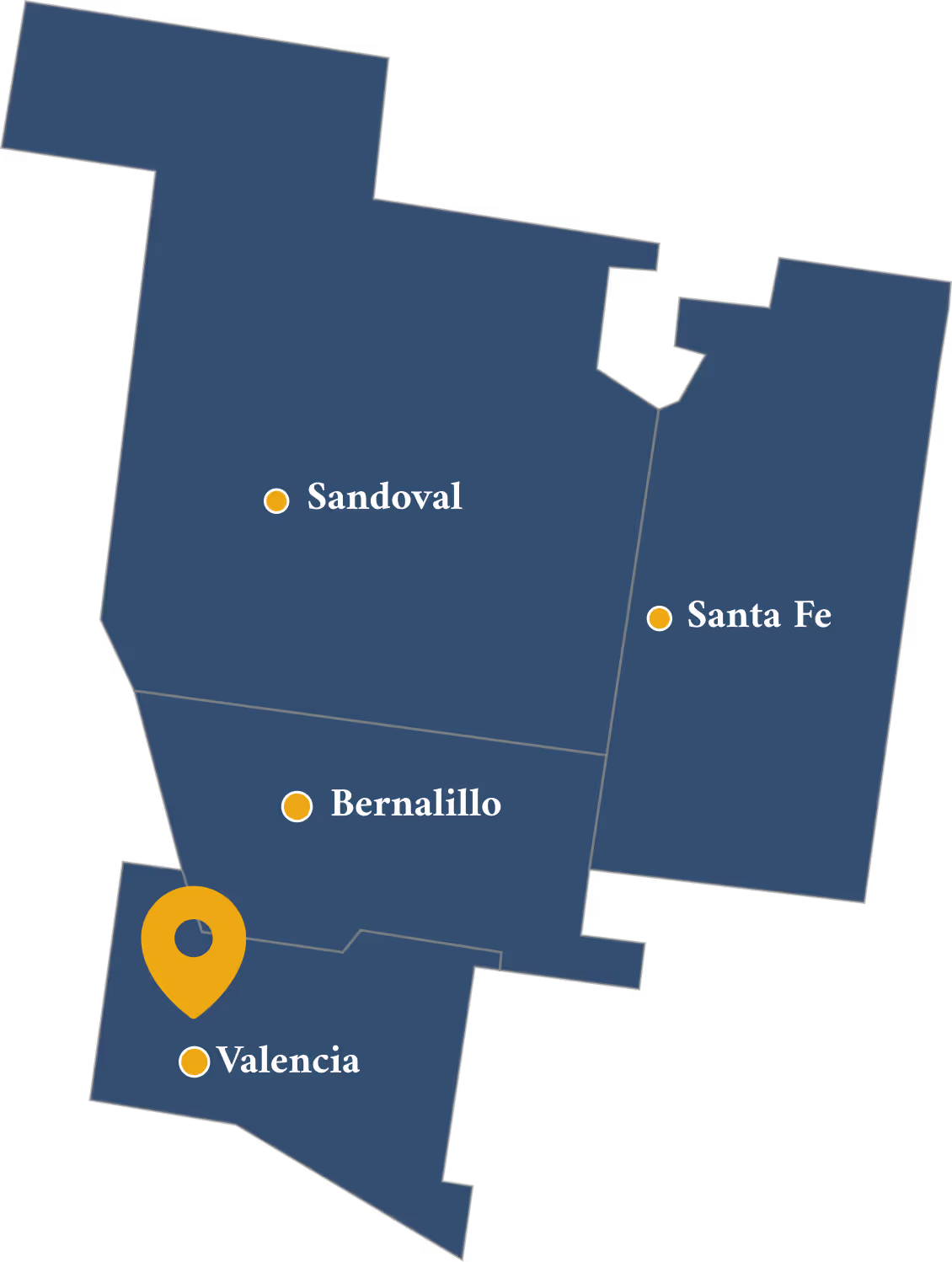
Rio Rancho Municipal Court may handle local traffic citations, arrests, code cases, and petty misdemeanors. More serious or county-level matters may move through the Sandoval County Magistrate Court or the district court, depending on the charge.
A Rio Rancho Criminal Case Can Cost More Than a Fine
A criminal charge can result in a jail sentence, probation, license loss, firearm restrictions, immigration problems, job issues, and a public record. The exact risk you face depends on the charge, facts, record, and sentence.
Misdemeanors Can Still Mean Jail
In New Mexico, a misdemeanor can carry less than one year in jail, a fine of up to $1,000, or both. A petty misdemeanor can carry up to six months in jail, a fine of up to $500, or both under NMSA § 31-19-1.
Felony Sentences Start at 18 Months
Basic felony sentences include 18 months for a fourth-degree felony, three years for a third-degree felony, nine years for a second-degree felony, and 18 years for a first-degree felony under NMSA § 31-18-15.
DWI Can Threaten Your License and Freedom
New Mexico DWI law includes alcohol impairment, drug impairment, 0.08 BAC, 0.04 BAC for commercial drivers, and aggravated DWI at 0.16 BAC or higher under NMSA § 66-8-102.
A first DWI can carry up to 90 days in jail, a fine of up to $500, at least 24 hours of community service, DWI school, screening, and probation up to one year.
The New Mexico MVD lists license revocation periods as one year for a first criminal DWI conviction, two years for a second, three years for a third, and a lifetime for a fourth or later.
Repeat DWI Raises the Minimums
A second DWI requires at least 96 consecutive hours in jail. A third DWI requires at least 30 consecutive days in jail. A fourth DWI is a fourth-degree felony with an 18-month prison sentence, including six months that cannot be suspended, deferred, or taken under advisement under NMSA § 66-8-102.
Weapons Allegations Can Add Years
If a firearm is brandished during a noncapital felony, New Mexico law can add three years to the sentence. If discharged, it can add five years under NMSA § 31-18-16. A felon found with a firearm is generally charged as a third-degree felony under NMSA § 30-7-16.
Expungement Is Not Automatic
New Mexico Courts state that a person released without conviction may generally petition for expungement one year after final disposition. For eligible convictions, waiting periods may be two, four, six, eight, or 10 years.
Some records are excluded, including DWI, sex offenses, offenses against children, embezzlement, and offenses causing great bodily harm or death.
Ready to Fight Back?
Facing an experienced prosecutor? Hire the former one. Don't go in outmatched.
The Proof: Real Client Outcomes and Reviews
Peake Law Firm: Strength in Every Case Angle
Jonathan M. and Vanessa Peake founded Peake Law Firm in 2010. After gaining experience as a prosecutor, Jonathan uses that insight to defend clients in criminal matters across Central New Mexico. When a criminal case overlaps with custody, protective orders, or family issues, Vanessa Peake and the firm’s bilingual team can provide added support.
Rio Rancho clients get direct communication, focused case preparation, bilingual support, and a former prosecutor's defense strategy.


Your Next Court Date Should Not Be a Guess
Bring the charge, the paperwork, and the questions. Peake Law Firm will help you see what you are facing, what can be challenged, and what the next move should be. Schedule a consultation with our Rio Rancho criminal defense attorney today.
FAQ
Should I talk to the police after a Rio Rancho arrest?
No. Ask for a lawyer before answering questions about what happened, where you were, who was involved, or whether police can search your property. A short answer can be used later in a way you did not expect.
What should I bring to my first call with a criminal defense lawyer?
Bring or send the citation, criminal complaint, release paperwork, bond conditions, police card, court notice, DWI paperwork, photos, videos, texts, witness names, and anything that may show your side of the story.
Where will my Rio Rancho criminal case be heard?
It depends on the charge. Some matters go through the Rio Rancho Municipal Court. Others may go through the Sandoval County Magistrate Court or a district court. The court affects deadlines, hearing types, and possible defense options.
Can a Rio Rancho DWI be dismissed?
Possibly. A DWI may be dismissed or reduced if the defense finds problems with the stop, arrest, testing, officer testimony, video evidence, probable cause, or missing records. The facts decide the available path.
Can my charge be reduced instead of dismissed?
Possibly. Some cases resolve through reduced charges, deferred sentences, plea agreements, probation terms, or other negotiated outcomes. The strength of the evidence, the charge, the record, and the prosecutor’s position all matter.
What evidence can help my defense?
Helpful evidence may include video, photos, call logs, text messages, GPS data, receipts, medical records, workplace records, witness names, ride-share receipts, or anything that challenges timing, intent, identity, or credibility.
What should I avoid after being charged?
You should avoid violating court requirements, so it’s important to understand the expectations. Do not contact alleged victims or witnesses if the court prohibits it. Do not delete messages. Do not miss court, and do not ignore testing or release conditions. You should also avoid posting about the case online.
How does Peake Law Firm find weak points in the State’s case?
Peake Law Firm looks at the parts of the case the prosecutor must prove, not just the charge on paper. That means testing the stop, search, arrest, statements, videos, lab work, witness accounts, and police reports for gaps or contradictions. If the evidence does not support the charge, the defense can push for suppression, reduction, dismissal, or a stronger trial position.