
Albuquerque Resisting Arrest Lawyer
Former Prosecutor, Plus 17 Years Fighting Criminal Charges


28+
years
of Combined Legal Experience
400+
Resolved Cases

Defending Resisting Arrest Charges in Albuquerque
A resisting arrest charge in Albuquerque can mean jail time, fines, and a criminal record that follows you for years. These charges often accompany other criminal accusations, turning a single incident into multiple legal battles. As a resisting-arrest attorney with 17 years of prosecutor experience, Jonathan Peake knows exactly how the state builds these cases and where its evidence and strategy fall apart.
New Mexico law defines resisting arrest broadly under NMSA § 30-22-1, covering everything from physically pulling away during handcuffing to fleeing on foot or refusing to stop your vehicle when signaled by police. Prosecutors must prove you acted willfully and intentionally, and that the officer was lawfully performing their duties. That burden of proof creates defense opportunities most people miss.
Physical Resistance During Arrest
Fleeing or Evading Officers
Verbal Resistance or Refusal to Comply
High-Speed Pursuits

Physical Resistance During Arrest
Pulling your arm away, tensing up during handcuffing, or turning your body can all trigger resisting arrest charges. Officers interpret reflexive movements as intentional resistance. Prosecutors push these cases aggressively even when no actual violence occurred. We examine whether your actions were truly willful or simply instinctive reactions to fear, confusion, or pain.

Fleeing or Evading Officers
Running from police on foot, driving away when ordered to stop, or refusing to pull over when emergency lights activate behind you falls under evading arrest. The state must prove you knew an officer was attempting to apprehend you. Unmarked vehicles, plain clothes officers, or chaotic situations create reasonable doubt about your knowledge and intent.

Verbal Resistance or Refusal to Comply
Arguing with officers, questioning commands, or refusing to follow orders can lead to obstruction charges. New Mexico law requires willful resistance, not just disagreement or confusion. We challenge whether commands were clear, lawful, and possible to follow under the circumstances.

High-Speed Pursuits
Failing to stop your vehicle when police signal you creates serious resisting arrest charges, often paired with reckless driving accusations. These cases hinge on whether you actually saw the signals, whether the officer's vehicle was properly marked, and whether you had knowledge that police were attempting a stop.
.avif)
Prosecutors Build Resisting Arrest Cases Fast. Your Defense Can't Wait.
Evidence disappears within days of arrest. Witness memories fade. Video footage gets overwritten. Body camera angles shift interpretations. Constitutional violations become harder to prove the longer you wait.

New Mexico Resisting Arrest Law (NMSA § 30-22-1)
New Mexico criminalizes "resisting, evading, or obstructing an officer" under a single statute covering multiple scenarios. Understanding what the law actually requires, and what prosecutors must prove, reveals defense opportunities.
What Qualifies as Resisting, Evading, or Obstructing
The statute makes it a crime to:
- Knowingly obstruct, resist, or oppose any officer serving legal process or executing court orders.
- Intentionally flee or evade an officer when you know they're attempting to arrest you.
- Willfully refuse to stop your vehicle when given visual or audible signals by a uniformed officer in a marked police vehicle.
- Resist or abuse any judge, magistrate, or peace officer lawfully performing their duties.
What Prosecutors Must Prove
Prosecutors carry the burden of proving specific elements beyond a reasonable doubt:
- Willfulness: Your actions must be deliberate and intentional. Reflexive movements, panic reactions, or confusion don't meet this standard.
- Knowledge: You must have known the person was an officer attempting an arrest. Plainclothes officers, unmarked vehicles, or failure to identify create reasonable doubt.
- Lawful conduct: The officer must have been acting lawfully. Unlawful arrests, excessive force, or constitutional violations undermine the foundation of resisting arrest charges.
Resisting Arrest vs. Peace Officer Battery
Resisting arrest doesn't require physical contact with the officer. A peace officer battery requires that the resistance culminate in actual physical contact. The charges often appear together, but they're distinct offenses with different elements and different defenses.
Penalties for Resisting Arrest in New Mexico
Resisting arrest is classified as a misdemeanor in New Mexico, but the consequences extend far beyond the criminal penalties.
Employment and Background Checks
Employers conducting background checks see misdemeanor convictions. Many companies have blanket policies refusing to hire applicants with any criminal record involving police officers. Jobs in healthcare, education, law enforcement, security, and financial services become difficult or impossible to obtain.
Professional Licenses
State licensing boards for nurses, teachers, attorneys, social workers, real estate agents, and contractors require disclosure of criminal convictions. A resisting arrest conviction can trigger license suspension, denial of applications, or additional scrutiny during renewals.
Immigration Consequences
Non-citizens face serious immigration consequences from criminal convictions. While resisting arrest is typically a misdemeanor, it can be considered a crime involving moral turpitude depending on the specific conduct. This can affect visa applications, green card renewals, and naturalization applications, and may even trigger deportation proceedings.
Firearm Rights
Misdemeanor convictions don't automatically strip firearm rights the way felonies do, but courts can impose firearm restrictions as conditions of probation. Additionally, certain resisting arrest convictions involving violence may trigger federal firearm prohibitions.
Expungement Timeline
Resisting arrest convictions remain on your record indefinitely unless expunged. Under New Mexico's Criminal Record Expungement Act, you become eligible to petition for expungement two years after completing your sentence. No law guarantees approval, so fighting the original charges is the better path.
How We Defend Resisting Arrest Charges
Jonathan's background in prosecuting these cases reveals exactly where the state's evidence breaks down. Every resisting-arrest case involves questions of intent, lawfulness, and evidence that can be challenged effectively.

Challenging Intent and Willfulness
Prosecutors must prove your resistance was willful and intentional. Reflexive movements, panic responses, pain reactions, medical conditions, language barriers, or genuine confusion about commands don't constitute willful resistance. We build records showing your actions were involuntary or resulted from circumstances beyond your control.
Unlawful Arrest Defense
If the underlying arrest was unlawful, resisting arrest charges cannot stand. Officers must have probable cause to arrest you. Warrantless arrests require specific legal justifications. We challenge the lawfulness of the arrest itself, examining whether officers had legal authority to detain you in the first place.
Lack of Knowledge
You cannot resist arrest if you didn't know someone was attempting to arrest you. Plain clothes officers in unmarked vehicles create ambiguity. Officers who fail to identify themselves or give clear commands prevent you from forming the required knowledge. We examine every detail about what you could actually see, hear, and understand during the encounter.
Excessive Force and Self-Defense
You have the right to protect yourself from unlawful use of force. When officers use excessive force during an arrest, your physical response may be justified self-defense rather than resistance. Video evidence from body cameras, surveillance footage, and cell phone recordings becomes critical in these defenses.
Mistaken Identity
Chaotic situations, poor lighting, multiple people present, and officers arriving after incidents have begun create mistaken-identity scenarios. We investigate whether officers actually arrested the right person and whether witness identifications were reliable.
Insufficient Evidence
Prosecutors must prove every element beyond a reasonable doubt. Missing video evidence, conflicting officer statements, absent witnesses, and gaps in the timeline create reasonable doubt. We force prosecutors to meet their burden rather than accepting their narrative.
Constitutional Violations
Illegal searches, Miranda violations, due process violations, and improper arrest procedures can result in the suppression of evidence or the complete dismissal of charges. Constitutional protections apply even during arrests, and violations of these rights provide powerful defenses.
Why Choose Peake Law Firm for Resisting Arrest Defense
Former Prosecutor's Knowledge
As a prosecutor, Jonathan filed these types of charges for many years. He knows how the state analyzes police reports, what evidence it considers strong, and where its cases fall apart during cross-examination.
Local Court Experience
We regularly handle resisting-arrest cases in the Bernalillo County Metropolitan Court and the Second Judicial District Court. Jonathan knows the judges, prosecutors, and procedures that determine outcomes in Albuquerque.
Immediate Investigation
Evidence disappears quickly after arrest. We review body camera footage, interview witnesses, and examine police reports before critical details fade — moving fast from the moment you contact us.
English or Spanish Communication
We serve clients in English or Spanish, ensuring clear communication about your charges, options, and the defense strategy. No legal jargon, no vague reassurances, no false promises.
17 Years of Criminal Defense Experience
Jonathan has defended hundreds of criminal cases throughout New Mexico, from misdemeanors to serious felonies. That depth of trial experience matters when your freedom is at stake.
Charged with Resisting Arrest? Your Defense Starts Now.
Resisting arrest charges in Albuquerque can result in jail time, fines, and a permanent criminal record. Jonathan M. Peake spent years prosecuting these cases and now uses that insider knowledge to defend clients facing them.
Jonathan M. Peake: Prosecutor Experience Working for Your Defense
Albuquerque Resisting Arrest Attorney | Former Prosecutor
- 17 years of criminal law experience in New Mexico.
- Former prosecutor who filed resisting arrest charges and now defends against them.
- Fluent in English and Spanish, serving clients across Bernalillo County and central New Mexico.



What Albuquerque Clients Say About Their Defense
Resisting Arrest Defense Across Albuquerque and Central New Mexico
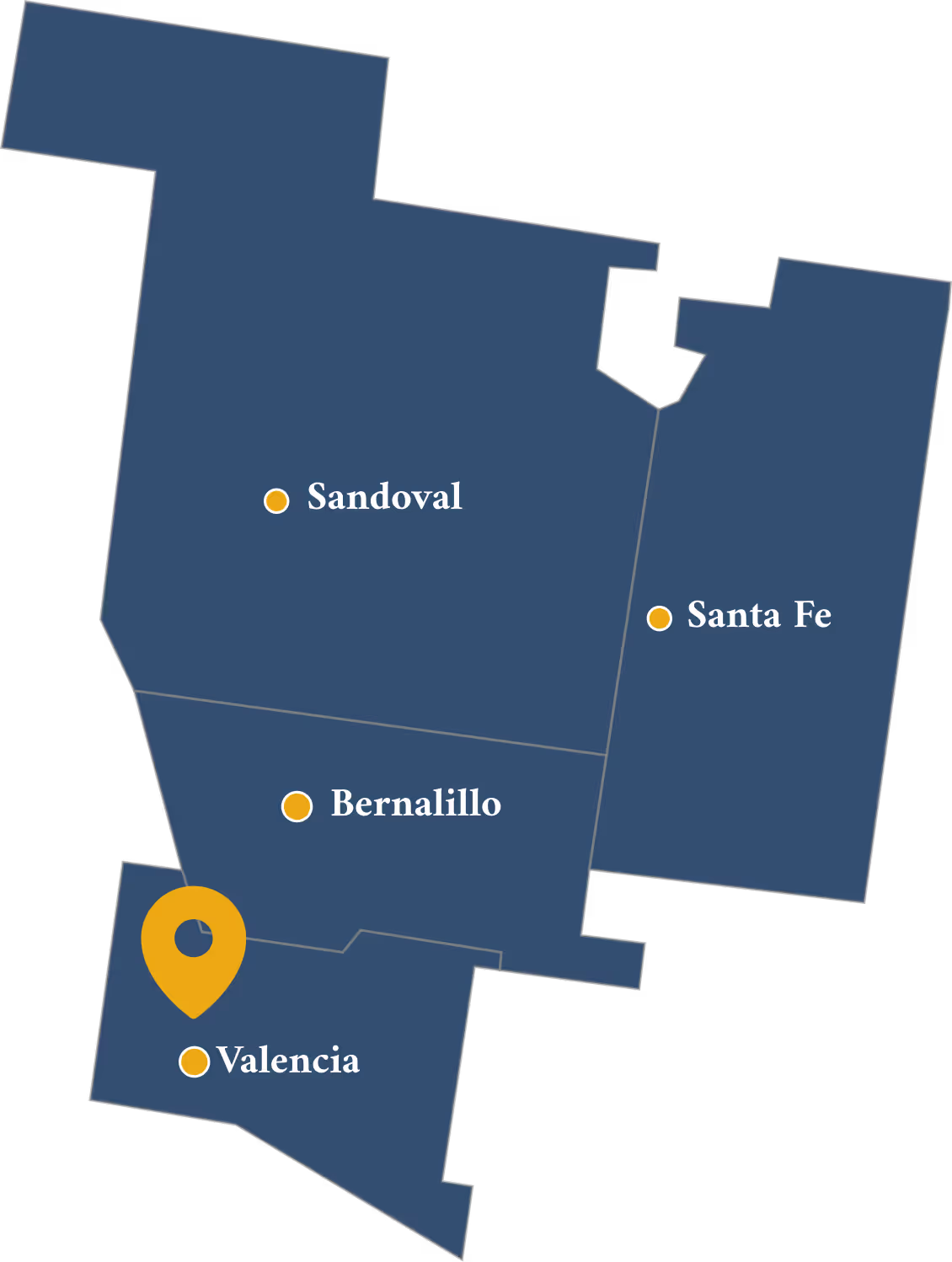
We represent clients throughout Albuquerque and the surrounding areas, including cases before the Bernalillo County Metropolitan Court, the Second Judicial District Court, and courts in Sandoval, Santa Fe, and Valencia Counties.
Our Office:
Office Location: 1100 4th St NW, Suite A Albuquerque, NM 87102
Phone: (505) 750-7702
Email: [email protected]

Start Your Defense with a Straight-Talk Consultation
Meet a former prosecutor with 17 years of criminal defense experience in New Mexico courts. Get direct answers about your charges, an honest and realistic assessment of your options, and a defense plan built around the specific facts of your case. We give you the truth from day one.
Resisting Arrest Questions Answered
Can resisting arrest charges be dismissed in Albuquerque?
Yes. Dismissals happen when prosecutors cannot prove willful resistance, when the underlying arrest was unlawful, when evidence shows a lack of knowledge that an arrest was occurring, or when constitutional violations occurred. We pursue dismissal in every case where the evidence supports it.
What if I didn't know the person was a police officer?
That's a potential defense. The law requires knowledge that an actual police officer is attempting to arrest you. Plain clothes officers, unmarked vehicles, officers who fail to identify themselves, and chaotic situations all create reasonable doubt about your knowledge. Prosecutors must prove you knew, and if they don’t meet that burden, we can potentially win your case.
Can I be charged with resisting arrest if I was never actually arrested?
Yes. The statute covers resisting, evading, or obstructing attempts to arrest, not just completed arrests. Fleeing from officers attempting to detain you, refusing to stop when commanded, or physically resisting during the arrest process all qualify.
What if the officer used excessive force?
You have the right to protect yourself from unlawful force. Excessive force can justify physical responses that would otherwise constitute resistance. We gather video evidence, medical records documenting injuries, and witness statements to build self-defense arguments.
Will resisting arrest charges affect my other criminal charges?
They can. Resisting arrest charges often accompany other accusations, such as DWI, assault, and drug possession. Prosecutors use resisting charges as leverage during plea negotiations. Fighting the resisting charge protects your position on all charges.
How long does resisting arrest stay on my record in New Mexico?
Indefinitely, unless expunged. You become eligible to petition for expungement two years after completing your sentence under New Mexico's Criminal Record Expungement Act. The petition process requires filing fees and court hearings, and there is no guarantee of approval.
Can body camera footage help my case?
Often. Body cameras capture what officers actually saw and heard, what commands they gave, whether they identified themselves, and whether you appeared to understand what was happening. Camera angles, audio quality, and timing all matter. We review footage immediately, looking for gaps between the police report narrative and what actually occurred.
What's the difference between resisting arrest and obstruction?
They're related but distinct. Resisting arrest focuses on interfering with an arrest attempt. Obstruction encompasses broader interference with law enforcement, such as lying to officers, concealing evidence, and disrupting investigations. The charges often appear together but require different evidence and different defense strategies.
Should I accept a plea deal for resisting arrest?
Not without understanding what you're giving up. Plea deals require careful analysis — examining the strength of the prosecutor's evidence, the likelihood of conviction at trial, the immigration consequences, the employment impacts, and how a conviction would affect other pending charges. No attorney can tell you to accept or reject a plea without thoroughly investigating your case first.
Can resisting arrest be charged as a felony?
Basic resisting arrest is a misdemeanor under NMSA § 30-22-1. However, if your resistance includes assaulting an officer, the charges escalate. Battery upon a peace officer, aggravated battery upon a peace officer, and assault with intent to commit a violent felony upon a peace officer are all felonies with much harsher penalties.