What You Need to Know About the NM Speed Limit Laws
Updated:
19/10/2026
Table of Contents
A trooper clocks you on I-25 north of Albuquerque. Or you get pulled over on a two-lane road out in Valencia County, on a stretch where you never saw a posted sign. Now the citation is in your hand, and the questions start stacking up. What does it cost? Do points land on your license? Does any of this follow you when a future employer runs a background check?
Those answers are not the same for every ticket. A $15 fine for drifting a few miles over and a reckless-driving charge that can put you in jail both start the same way: with a stop for speed. Where they end depends on how fast you were going, how the officer wrote up the stop, and what you do in the days that follow.
With nearly two decades of criminal law experience in New Mexico, the Albuquerque criminal defense attorneys at Peake Law Firm handle speeding and related driving cases across Bernalillo, Sandoval, Santa Fe, and Valencia Counties. Our team includes a former prosecutor, so we know how these cases are built and where they come apart.
This guide explains what New Mexico law says about speed limits, what the numbers on your citation really mean, how a paid fine can quietly cost you far more than the fine itself, and the point at which speeding stops being a ticket and turns into a criminal charge.
New Mexico Sets a Speed Ceiling and a Second Rule That Catches People Off Guard
Most drivers assume the number on the sign is the whole law. It is only half of it. Section 66-7-301 NMSA sets fixed maximum speeds for different kinds of roads, and it also sets a separate rule that has nothing to do with the posted number at all.
The fixed statutory maximums are:
- 75 mph for the general, statewide top speed;
- 55 mph on a county road with no posted speed limit;
- 30 mph in a business or residence district;
- 15 mph passing a school when children are going to or leaving school, and the zone is properly posted;
- The posted limit in construction or safety zones marked as double-fine zones.
The part that surprises people is the second half of the statute. Even when you are under the posted number, New Mexico law still requires you to control your speed for the actual conditions in order to avoid a collision, obey limits set by the Department of Transportation or the State Police, and protect workers in marked zones. You can be cited for driving too fast for rain, ice, fog, or heavy traffic at a speed below the limit.
That distinction matters for anyone fighting a ticket. If a citation was written for “too fast for conditions” rather than for beating a posted number, the state has to prove the conditions actually made your speed unsafe, not just that you were moving. That is a very different case from a straightforward radar reading over a clearly posted limit.
How New Mexico Decides Which Speed Limit Applies to You
New Mexico layers statutory caps on top of posted limits that engineers set for specific stretches of road. Working out which limit legally governed the exact spot where you were stopped is often the first place a defense begins, because the answer is not always the number printed on the ticket.
The Statewide Maximum
The general ceiling on New Mexico highways is 75 mph. You will see it on rural interstates like I-25 and I-40. It is the top lawful speed under the statute unless a posted sign says otherwise.
Above roughly 26 mph over that ceiling, the fines and the points climb quickly, and prosecutors start paying closer attention to whether the driver crossed into reckless territory.
Posted Limits Can Raise or Lower the Default
Individual roads often carry a different posted limit: 45 through a commercial corridor, 25 in a neighborhood, and 65 on some highways. These come from Section 66-7-303 NMSA, which lets the Department of Transportation and local authorities set zone-specific limits based on an engineering study.
New Mexico courts have held that the posted sign by itself is enough to establish the limit. The state does not have to produce the underlying engineering survey just to prove what the limit was. That ruling cuts against a popular myth that you can beat a ticket simply by demanding the traffic study.
School Zones and Business or Residential Districts
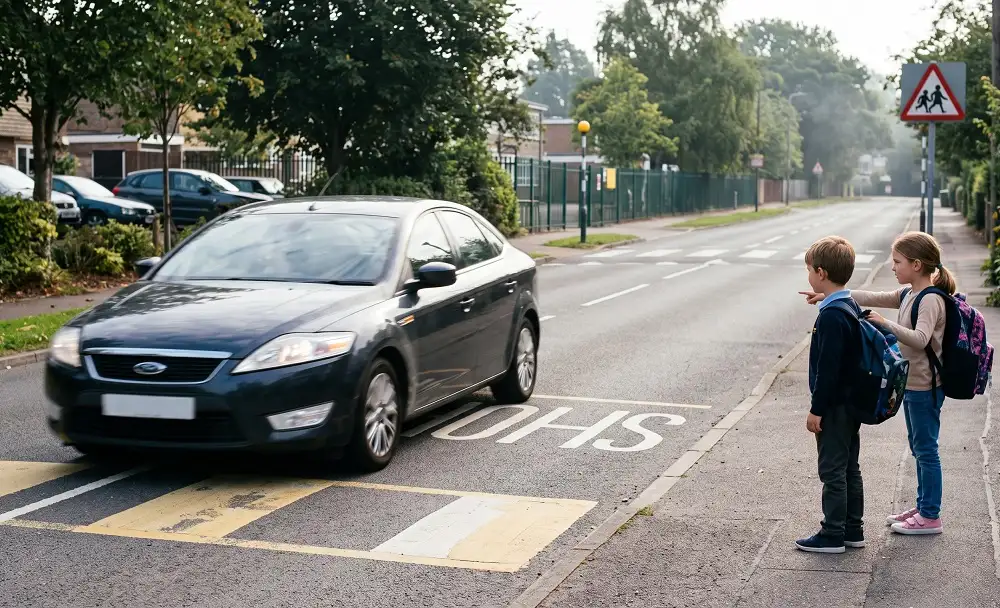
The 15 mph school-zone limit applies only when children are present and when the zone is properly posted. The 30 mph business-or-residence-district limit applies where the surrounding area fits the statutory definition, even if you do not see a sign on every block.
Officers and prosecutors lean on these categories, but the state still has to prove the road actually qualifies as a school zone or a business or residence district. That is not always as clear-cut as the citation makes it look, and where the classification is shaky, the limit charged can be challenged.
County Roads with No Posted Signs
On a county road with no posted limit, the default is 55 mph. This detail matters more than people expect. If you were cited on an unmarked rural road, the exact classification of that road, whether it legally counts as a county road, and whether any limit was posted, can change what limit actually applied to you, and whether the ticket stands.
On unfamiliar rural roads near the edges of Sandoval or Valencia County, drivers are often surprised to learn the default was higher or lower than they assumed.
#cta_start
A Speeding Ticket Doesn’t Have to Stick
Not every citation holds up once the evidence is reviewed. Paying the fine is a guilty plea, and the points come with it. If you have been cited in Albuquerque, Rio Rancho, Santa Fe, or Los Lunas, contact Peake Law Firm before you pay a dime.
#cta_end
What a Speeding Ticket Actually Costs in New Mexico
Most speeding in New Mexico is a penalty-assessment misdemeanor, a civil-style traffic offense you can resolve by paying a set fine, without jail and without a criminal conviction on your record. The base fines come from the penalty-assessment schedule in Section 66-8-116 NMSA, and the amount rises with how far over the limit you were clocked:
These are the statutory penalty-assessment figures. Courts add fees and costs on top of them, and in a construction or safety zone posted as a double-fine zone, the assessment is doubled.
Individual courts sometimes list higher amounts on their own schedules, so the total you actually owe can run well past the base number. And if you pay the penalty assessment, you are closing the case but locking in every consequence that comes with a conviction.
The Double-Fine Zones That Turn a Small Ticket Into a Big One
A double-fine zone is a stretch of road, often a construction zone or a designated safety corridor, where the penalty assessment for speeding is doubled. These zones are marked with signs to protect road workers and to address stretches with a history of serious crashes.
The doubled fine applies whether workers are physically present at the moment you pass through or not, as long as the zone is properly posted. A ticket that would ordinarily be a modest fine can become a much larger one, and courts treat violations in these zones seriously. If you were cited in one, whether the zone was correctly posted at the point of the stop is worth checking closely.
The Cost You Don’t See Printed on the Ticket
For most drivers, the fine is the smallest part of the damage. A speeding conviction puts points on your driving record, and those points can raise your auto-insurance premiums for years and push you toward a license suspension.
For anyone who drives for work, holds a commercial license, or is already carrying points, that hidden cost usually dwarfs the fine. It is the piece most drivers never weigh before they mail in a payment, and once the payment clears, it is difficult to undo.
How the New Mexico Point System Can Cost You Your License

The Motor Vehicle Division assigns demerit points for traffic convictions under its point-system schedule. For speeding, the points scale with how far over the limit you were going. A minor overage adds a couple of points, while going well over the limit adds more, and a reckless-driving conviction adds six at once.
The thresholds are where drivers get caught out, and they hit sooner than the old “12 points” rule of thumb suggests:
- 7 to 10 points in a rolling 12-month window: A municipal or magistrate court can recommend a suspension of up to three months, which the MVD then imposes.
- 12 or more points in a rolling 12-month window: The driver receives an automatic 12-month suspension.
That window is a rolling one, so the MVD looks back twelve months from your most recent conviction, not at a calendar year. A single fast ticket rarely reaches seven points on its own, but stack a second conviction on top of an earlier one, and drivers cross the line faster than they expect.
Getting a license back after a suspension usually means completing a defensive-driving course, paying reinstatement fees, and showing proof of insurance.
Points also outlast the moment they are assessed. Insurers pull your record when you renew, and a pattern of convictions reads as a risk that can raise your rates or cause a policy to be dropped altogether.
That is why quietly paying a ticket can cost far more over time than the fine itself. Fighting or reducing a charge is often about keeping the points off, not just avoiding the dollars.
New Mexico also honors out-of-state convictions and reports its own through the interstate compact that most states share, so points here can echo onto a record in another state. More on that point system and how suspensions are triggered is set out in the state’s administrative code.
When Speeding Crosses the Line into Reckless Driving
Excessive speed can be charged as reckless driving under Section 66-8-113 NMSA. The statute defines reckless driving as operating a vehicle carelessly and heedlessly, in willful or wanton disregard for the rights or safety of others.
High speed combined with weaving through traffic, racing, tailgating, or dangerous road conditions can meet that bar, and once it does, you are no longer looking at a simple ticket.
This is a genuine criminal misdemeanor, not a pay-the-fine offense. A first conviction carries 5 to 90 days in jail, a fine of $25 to $100, or both. A second or later conviction raises the exposure to 10 days to six months in jail, a fine of $50 to $1,000, or both.
On top of that, a reckless-driving conviction adds six points to your record and lets the MVD suspend your license for up to 90 days. A conviction of reckless driving can also surface on a background check in a way an ordinary speeding ticket does not.
The line between a speeding ticket and a reckless-driving charge often comes down to how the officer describes your driving in the report, and that description is not the final word. Where the facts do not genuinely support “willful or wanton” conduct, where you were speeding but not endangering anyone, there is room to challenge the charge and push it back down to a non-criminal violation, or off entirely.
Because this is criminal exposure rather than a fine, it is the kind of case worth handling with an Albuquerque criminal defense attorney rather than mailing in a payment.
When Speed Turns Into a More Serious Felony
Speed rarely travels alone. When a high-speed stop involves a crash, an injury, or a weapon in the car, the exposure can climb well past reckless driving. A collision that hurts someone can bring separate charges, and speed tied to a confrontation on the road can turn into a violent crime allegation.
A firearm in the vehicle during a reckless-driving stop can add weapons charges of its own. These are no longer traffic matters; they are felony-level exposure, and they are prosecuted as such. If your speeding stop escalated into anything involving injury, property damage, or another person, treat it as a criminal case from day one.
Where the Evidence Behind a Speeding Case Can Break Down
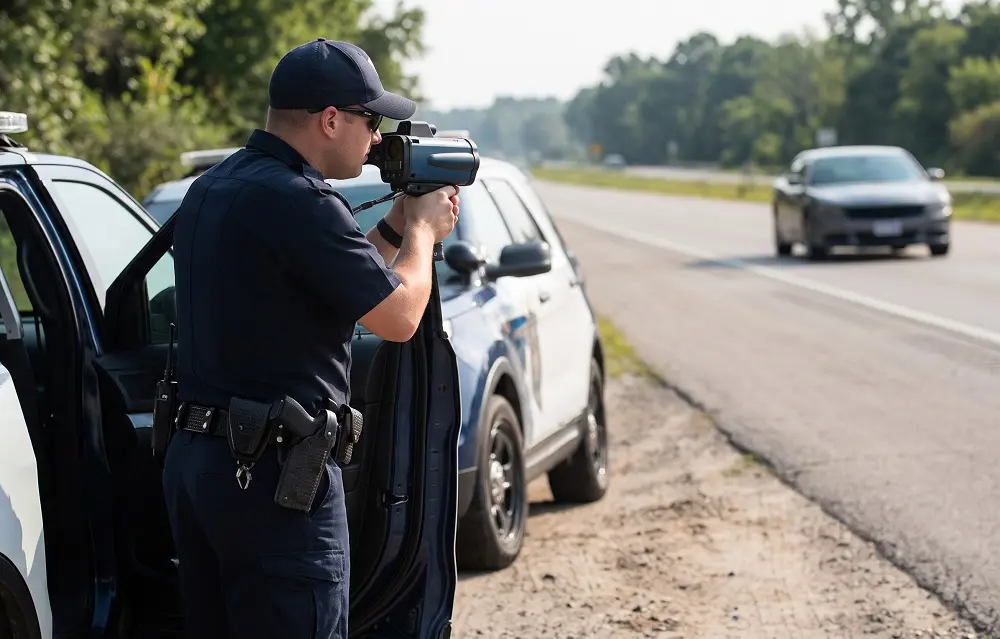
A speeding case rests on a single claim: that a device or an officer accurately measured how fast you were going, on a road where a specific limit legally applied. Neither half of that claim is automatically airtight. Depending on the facts, a defense attorney may examine:
- Radar or lidar calibration and maintenance records;
- Whether the officer was trained and certified on the specific device used;
- Whether the reading could have locked onto another vehicle in traffic;
- Whether the posted limit on that stretch was legally established and visible;
- Whether the road was correctly classified for the limit charged;
- Dash-camera or body-camera footage that contradicts the officer’s report;
- Weather, signage, lighting, and traffic conditions at the time of the stop.
If the state cannot show that the measurement was reliable, or that the limit it charged you under actually applied to that road, the case gets weaker. A weaker case creates room to negotiate the charge down, keep points off your record, or seek a dismissal outright. That review is exactly what an attorney does before you decide whether to fight or resolve the ticket. It is also why paying quickly, before anyone has looked at the evidence, so often turns out to be the most expensive option.
Why an Out-of-State Ticket Still Follows You Home
If you are driving on New Mexico roads, New Mexico’s speed limits apply to you regardless of where your license was issued. And a conviction here does not stay here. Most states share conviction information through the interstate Driver License Compact, so points or a suspension in New Mexico can reach your driving record and your insurance back home.
Drivers who assume a ticket picked up while passing through will not matter are often surprised months later, when it shows up at renewal. If you were cited on a road trip through central New Mexico, it is worth handling the ticket properly rather than ignoring it. An ignored citation can turn into a failure-to-appear and a warrant, which is a far bigger problem than the original fine.
What to Do After a Speeding or Reckless-Driving Ticket
The choices you make in the days after a citation can shape how it ends. A few steps protect your options and cost nothing to take.
Weigh Your Options
Paying resolves the ticket by pleading guilty. If you already have points, a job that depends on driving, or facts that don’t match what the citation says, that quick payment can be the costliest move you make.
Take a beat before you decide, and treat payment as one option among several, not the automatic default. Once you have paid, you generally cannot undo it, so the time to weigh your options is before the money changes hands, not after.
Write Down What Happened While It’s Fresh
As soon as you can, note where you were stopped, what the officer said the reason was, the posted signs you did or didn’t see, the road and weather conditions, and whether other vehicles were nearby. You can even take a photo of your surroundings. If the speed measurement or the reason for the stop is later contested, these details can matter a great deal, and memory fades fast.
Check the Charge Against the Road
The limit that applied to you at the time depends on how the road is legally classified and whether it was properly posted. A citation written for the wrong limit, or on a road that doesn’t actually fit the school zone or business district the officer assumed, is a citation with a real weakness.
It is worth confirming the posted limit at the exact spot you were stopped, because a mismatch between the charged limit and the actual one can be the opening on which a defense is built.
Talk to a Defense Attorney Before Your Court Date
Especially with a reckless-driving charge, or a ticket that could tip you toward a suspension, a lawyer can review the evidence, spot procedural problems, and often negotiate a reduction that keeps points off your record. The earlier you get advice, the more options stay open. For anything beyond a routine fine, contact Peake Law Firm for a short conversation with an Albuquerque criminal defense attorney.
Protect Your License with Peake Law Firm
Peake Law Firm serves drivers throughout Bernalillo, Sandoval, Santa Fe, and Valencia Counties, including Albuquerque, Rio Rancho, Los Lunas, and Santa Fe. With decades of combined criminal law experience and a former prosecutor on our team, we bring insight from both sides of the courtroom to speeding, reckless-driving, and related criminal defense cases.
Before you pay a fine and take the points, let us look at the evidence. Call now to schedule a free consultation.

Criminal Defense Attorney
Jonathan Peake is the founder and managing attorney of Peake Law Firm in Albuquerque, New Mexico. He is ready to build aggressive, strategic defenses for clients facing criminal charges.
Cited for Speeding in New Mexico? Put the Ticket to the Test.
Prosecutors have to prove the speed, the limit, and the road. Before you decide how to handle a citation, it helps to know how much a criminal defense lawyer costs in New Mexico. Then let Peake Law Firm review the evidence and fight to keep your license and your record clean.