Pros and Cons of Eyewitness Testimony
Updated:
23/10/2026
Table of Contents
A witness points across the courtroom, says “that’s the person”, and the room shifts. Few kinds of evidence land with a jury the way a confident eyewitness does, which is exactly what makes it powerful, and exactly what makes it dangerous when it’s wrong.
With nearly two decades of criminal law experience in New Mexico, the Albuquerque criminal defense attorneys at Peake Law Firm have handled hundreds of cases that turned on what a witness claimed to see. Our team includes a former prosecutor with in-depth knowledge of how cases are built.
Here is why eyewitness testimony carries such weight, why it so often gets things wrong, and how New Mexico law protects the accused.
The Role Eyewitness Testimony Plays at Trial
At trial, an eyewitness account does real work for the prosecution. It places a defendant at the scene, establishes what the state says occurred, and gives the jury a human narrative to follow, which is often the spine that the rest of the evidence hangs on.
A witness can testify to two different things: what happened, and who did it. Both matter, but the second is where the weight really falls.
In cases with little or no physical proof, that testimony can be the centerpiece of the state’s entire case, and a jury is allowed to convict on it alone. New Mexico does not require corroborating evidence to support a conviction built on eyewitness testimony; if the jury believes the witness, that can be enough.
That is precisely why the reliability of an account is so consequential: when it anchors the case, the verdict can turn entirely on whether the jury trusts one person’s memory.
And the weight juries give it is heavy. A confident witness pointing across the courtroom and naming the defendant is some of the most persuasive evidence a jury will ever see, which makes the difference between an accurate identification and a mistaken one enormously important.
Why Eyewitness Testimony Carries So Much Weight
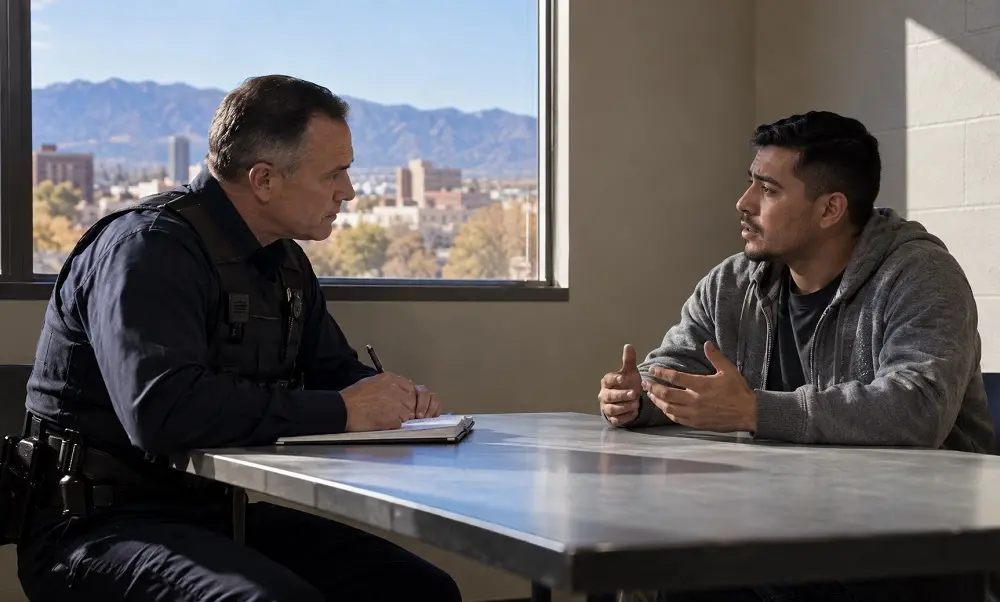
There is a reason prosecutors build cases around eyewitnesses. When it comes from a credible, well-positioned observer, this kind of testimony can be some of the most persuasive evidence in the courtroom. Its strengths are real:
It Puts a Human Face on the Evidence
A living witness who looked the event in the eye connects with a jury in a way that documents and lab reports cannot. Jurors relate to a person telling a story. That immediacy gives eyewitness testimony emotional force and makes it stick in a way that dry evidence rarely does.
It Can Fill Gaps No Other Evidence Reaches
In cases with little physical evidence, an eyewitness may be the only account of what happened and who was involved. A witness can describe a sequence of events, a motive, or a detail no camera captured, and that can be the piece that ties a case together.
The criminal defense attorneys at Peake Law Firm see this cut both ways: the same testimony the state relies on to fill a gap is often the very evidence that, on close examination, turns out to be the weakest part of its case.
A Confident, Consistent Account Is Hard to Rebut
When a witness is well-positioned, unhurried, and consistent from the first statement through trial, their testimony can be compelling and difficult for the defense to shake. A witness who knew the person beforehand, or who had a long and clear look under good conditions, can provide an account that genuinely holds up. Not all eyewitness evidence is unreliable, and treating it as automatically worthless is its own mistake.
#cta_start
Is the Case Against You Built on What Someone Thinks They Saw?
Memory is not proof. If a witness account is the backbone of your charges, the criminal defense team at Peake Law Firm can work to pull it apart before a jury ever hears it. Contact us for a free consultation.
#cta_end
Why Eyewitness Testimony Is Often Wrong
For all its power, eyewitness testimony is one of the least reliable forms of evidence in the system, and the data is sobering. According to the Innocence Project, mistaken eyewitness identification was a factor in roughly 69% of the wrongful convictions later overturned by DNA testing, making it the single leading contributor to proven wrongful convictions in the country.
The problem is not that witnesses lie. Most are doing their honest best. The problem is that human memory simply does not work the way people assume it does.
Memory Is Not a Recording
People tend to picture memories like a video they can replay on demand, but that’s not how it works. Memory is reconstructed each time it is recalled, and it is filled in, reshaped, and edited without the person ever noticing.
A witness can be completely sincere and completely wrong at the same time. Their confidence on the stand reflects how their memory feels to them, not how accurate it actually is.
Stress and the Weapon in the Room
Crimes are not calm, well-lit events. They are fast, frightening, and often over in seconds. High stress narrows and degrades memory rather than sharpening it. And when a weapon is involved, attention tends to lock onto the threat — the gun, the knife — pulling focus away from the one detail that matters most later: the face.
Researchers call this the weapon-focus effect, and it routinely leaves witnesses sure a crime happened but shaky on who committed it.
Poor Viewing Conditions Distort What a Witness Recalls
The conditions of the sighting shape everything that follows. A brief glimpse, poor lighting, distance, a partial disguise, or a face seen only in profile all cut into accuracy. Witnesses consistently overestimate how long they actually saw someone.
Cross-racial identification adds another well-documented layer of error. People are generally less accurate at identifying faces of a race different from their own. None of these factors means a witness is dishonest. They mean the human eye and mind have limits that a courtroom cannot wish away.
Suggestive Lineups Can Plant a False Memory
Some of the most damaging errors are introduced after the crime by the identification process itself. A lineup where the suspect stands out, an officer’s subtle nod or reassurance, or a photo array shown the wrong way can steer a witness toward a particular face.
Once a witness picks someone, that choice tends to harden, and each retelling makes them more certain, even if the original identification was a guess. By the time they reach trial, a shaky maybe has often become an unshakable yes.
How New Mexico Law Treats Eyewitness Identification
New Mexico has taken the risks of mistaken identification more seriously than most states. The Accurate Eyewitness Identification Act, found at NMSA § 29-3B-3, requires law enforcement agencies to adopt written identification procedures grounded in the science of memory.
Those procedures include using a blind or blinded administrator who does not know which person is the suspect, documenting the witness’s confidence in their own words at the time of the identification, and following practices designed to reduce the chance of a mistaken pick.
The state’s courts have gone further still. In State v. Martinez (2021-NMSC-002), the New Mexico Supreme Court adopted a strict rule: identifications produced by unnecessarily suggestive police procedures can be excluded from trial altogether.
That makes New Mexico one of the most protective states in the country on this issue, and it gives a defense attorney real leverage to keep an unreliable identification away from the jury in the first place.
How a Defense Attorney Challenges Eyewitness Testimony
When the state’s case leans on what someone saw, the account is not the last word; it is the starting point for a careful, evidence-based challenge. Depending on the facts, a defense may examine:
- The lighting, distance, angle, and time the witness actually had to see the person.
- Whether a weapon was present and pulled the witness’s attention away from the face.
- How much time passed between the event and the identification.
- Whether the lineup or photo array was conducted blind and free of suggestion.
- Whether officers said or did anything that steered the witness toward the defendant.
- Whether the witness’s confidence grew over time, which is a classic sign of contamination.
- Whether the identification was cross-racial or made under the influence of stress, alcohol, or drugs.
From there, the tools include a motion to suppress a tainted identification under the Martinez standard, cross-examination that exposes the gaps in the account, and, where appropriate, expert testimony explaining to the jury how memory really works.
The goal is to make sure the jury weighs the testimony as a fallible human recollection rather than treating it as a recording of the truth.
Where a Shaky Identification Does the Most Damage
A mistaken identification is not an abstract worry. It drives real charges. It puts the wrong person at the center of a violent crime case, names the wrong suspect in a domestic violence dispute where accounts conflict, or ties an innocent shopper to a theft they never committed.
In each of these, a single confident but flawed witness can carry a case that has almost nothing else behind it, which is exactly why the identification has to be tested.
The Pros and Cons of Eyewitness Testimony
Eyewitness testimony is neither automatically trustworthy nor automatically worthless. It carries genuine strengths and serious risks, and a fair case weighs both. The table below lays out what makes it powerful against what makes it dangerous.
Mistaken identification remains the single leading contributor to proven wrongful convictions in the country. The takeaway is not that every witness is wrong, but that no eyewitness account should be accepted at face value, especially when it is the foundation of the charges against you.
What to Do If a Witness Has Identified You
Being picked out by a witness is frightening, but an identification is a claim to be challenged, not a verdict. A few steps protect your position.
Say Nothing Until You Have a Lawyer
You have the right to remain silent, and this is the moment to use it. Trying to talk your way out of an identification almost never helps and often hands the state new material to use against you. Politely decline to answer questions and ask for a lawyer.
Contact Peake Law Firm to get the criminal defense attorneys who can speak to investigators on your behalf, so nothing you say in a stressful moment ends up reshaped into evidence for the prosecution.
Write Down What You Remember
As soon as you can, record where you actually were, who you were with, and anything that can be verified: receipts, texts, location data, or people who can account for your whereabouts. The conditions of the sighting fade from everyone’s memory quickly, so getting your own account down in writing early can matter later.
Get a Defense Attorney Involved Early
The sooner a lawyer reviews the identification, the more can be done with it, like preserving lineup records and any video, filing a suppression motion under New Mexico’s standard, and lining up an expert if the case calls for one.
Many people worry about the expense before they call. You can read our overview of how much a criminal lawyer costs in New Mexico, then talk it through with us directly. Waiting rarely helps a case built on memory; acting early often does.
Put the Eyewitness Account to the Test with Peake Law Firm
Peake Law Firm serves clients throughout Bernalillo, Sandoval, Santa Fe, and Valencia Counties, including Albuquerque, Rio Rancho, Los Lunas, and Santa Fe. With decades of combined criminal law experience and a former prosecutor on our team, we know how the state builds a case around a witness and how to take it apart when the memory behind it does not hold up.
If your case turns on what someone claims they saw, don’t leave it unexamined. Call now to schedule a free consultation.
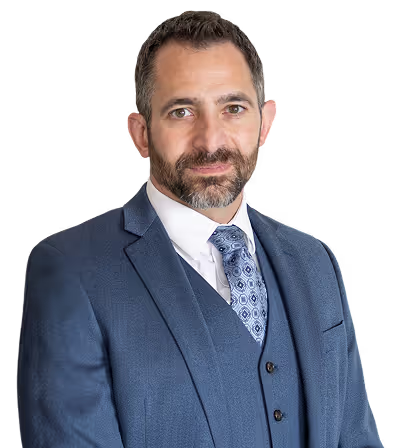
Criminal Defense Attorney
Jonathan Peake is the founder and managing attorney of Peake Law Firm in Albuquerque, New Mexico. He is ready to build aggressive, strategic defenses for clients facing criminal charges.
One Witness Shouldn’t Decide Your Future
Memory is fragile, and mistaken identifications put innocent people in jail every year. Peake Law Firm challenges the eyewitness evidence against you and fights to protect your record and your freedom. Reach out to us today.